
Professional Bedroom Mould Removal
Specialist bedroom mould removal and treatment for homes, flats and rental properties across Nottingham and the Midlands.
Mould growing on bedroom walls, ceilings or around windows can make your room unpleasant and difficult to maintain. JK Mould Removal provides professional bedroom mould removal to help you deal with visible mould and understand why it may be returning.
Whether you have black mould behind a wardrobe, patches near your bed or recurring mould around a bedroom window, we can assess the affected area and recommend suitable treatment.
Important: we remove and treat bedroom mould. We do not repair leaks, structural damp, insulation defects or other building problems — if your property has an underlying moisture problem, we recommend addressing it with a qualified specialist.
Bedroom Mould Problems We Treat
Bedroom mould can develop in different places, depending on moisture levels, ventilation, room temperature and the materials affected. Our bedroom mould treatment service focuses on identifying visible growth and selecting an appropriate cleaning or removal approach for the affected surfaces.
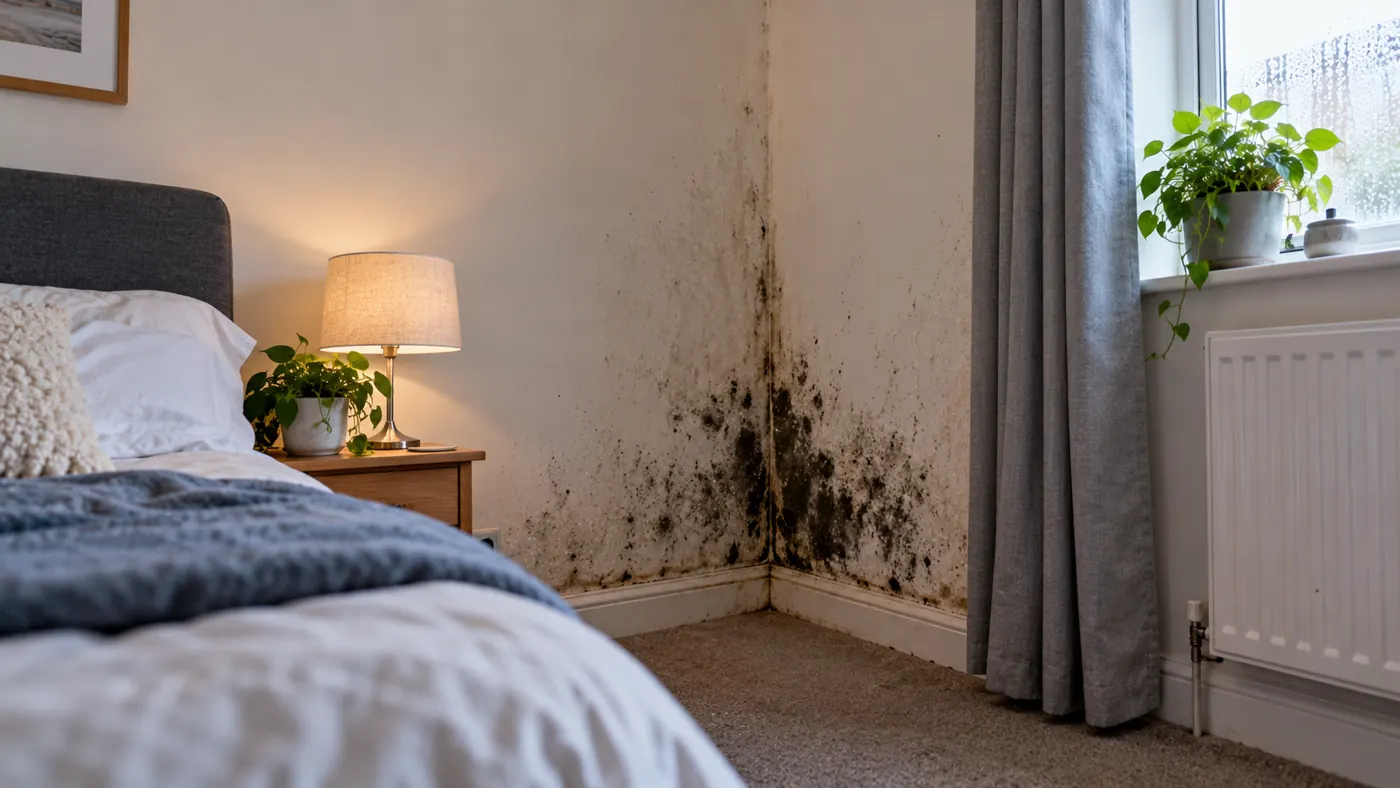
Mould on Bedroom Walls
Mould on bedroom walls often develops on colder external walls, especially where condensation regularly forms. Dark patches may appear in corners, near skirting boards or behind furniture. Professional treatment should consider both the mould growth and the condition of the wall surface.
Black Mould in Bedrooms
Black or dark-coloured mould can appear around windows, on painted walls and in poorly ventilated corners. Colour alone cannot identify a mould species or determine its potential health effects. The important step is to address unwanted mould growth safely and investigate the moisture conditions.
Learn more about our Black Mould Removal ServiceMould Behind Wardrobes and Furniture
Large wardrobes, chests of drawers and beds placed against external walls can restrict airflow. When warm, humid air meets a cold wall, condensation may develop behind furniture, creating conditions that support mould growth.
Bedroom Ceiling Mould
Mould on bedroom ceilings may appear along external wall junctions, in corners or near areas affected by moisture. The cause is not always condensation. Roof leaks, water damage or other building problems may also contribute.
Explore our Ceiling and Wall Mould Removal ServiceMould Around Bedroom Windows
Bedroom windows can collect condensation, particularly during colder weather. Persistent moisture around window frames, reveals and surrounding plaster can encourage mould growth if the area remains damp.
Mould Near Beds and Skirting Boards
Mould may develop behind headboards, along skirting boards or in corners where air circulation is limited. These areas should be inspected carefully to understand the extent of visible growth and whether surrounding materials have been affected.
Why Does Mould Keep Appearing in Bedrooms?
Bedroom mould is often associated with a combination of indoor humidity, cold surfaces and restricted ventilation. Understanding these conditions is important because removing visible mould does not automatically prevent it from returning.
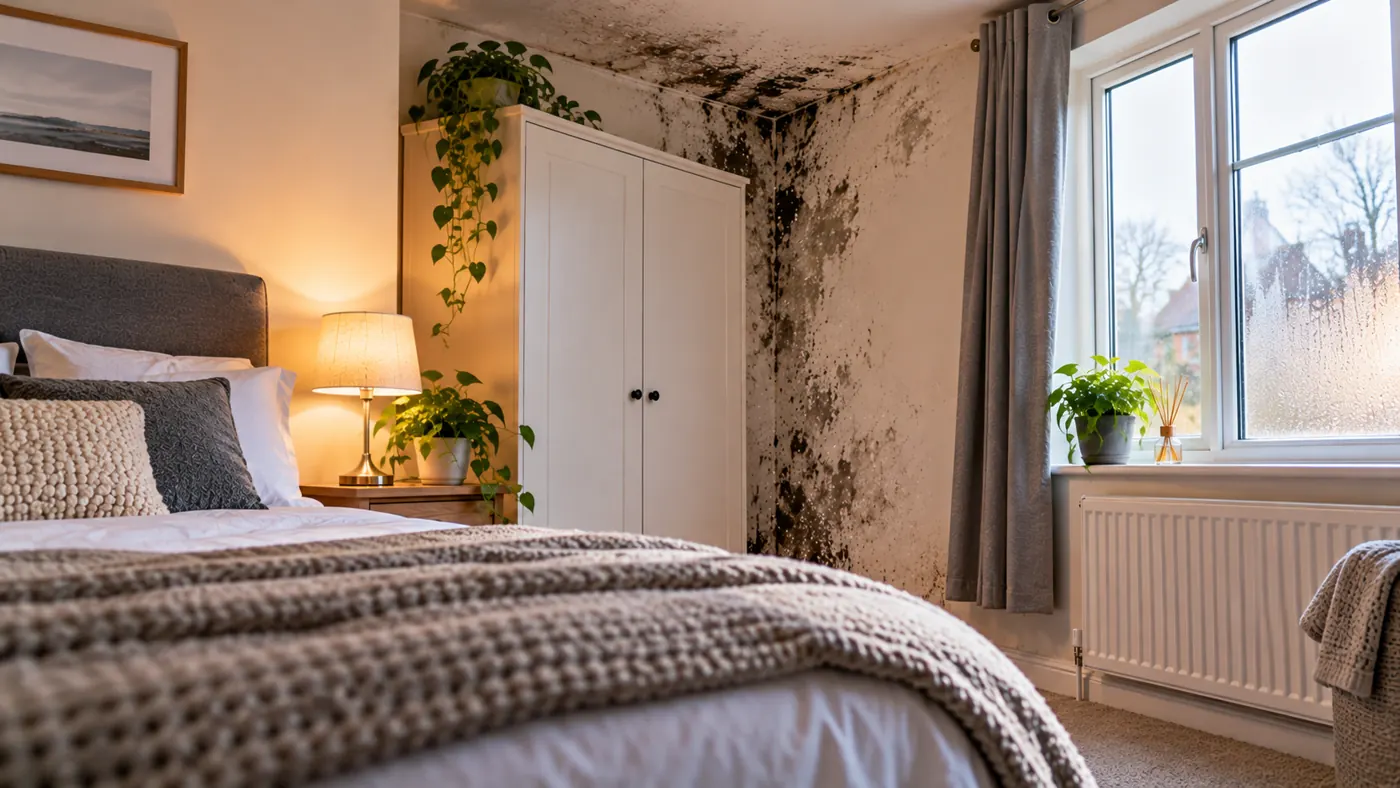
Condensation During the Night
People release moisture into indoor air through breathing and everyday activities. In a cool bedroom with limited ventilation, moisture may condense on windows, external walls and other cold surfaces.
Poor Air Circulation
Furniture positioned tightly against walls can prevent warm room air from circulating freely. This may leave certain areas colder and more vulnerable to condensation.
Cold External Walls
External walls and corners can become significantly colder than the surrounding room. Where warm, humid air reaches these surfaces, moisture may collect and create favourable conditions for mould.
Leaks and Hidden Moisture
Not every bedroom mould problem is caused by condensation. Water penetration, plumbing leaks, roof defects or other building issues can also cause persistent dampness. If the underlying problem requires building repairs, those repairs should be carried out by an appropriate specialist.
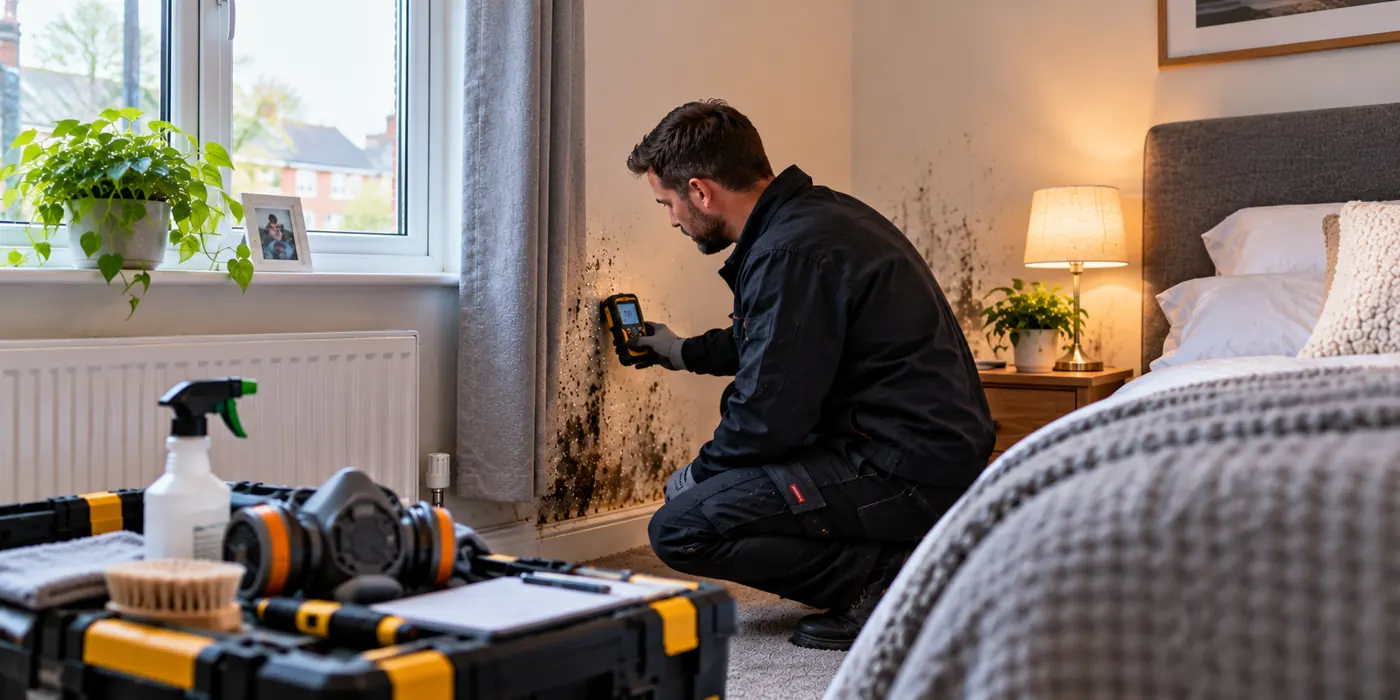
Our Professional Bedroom Mould Removal Process
Every bedroom is different. The treatment required depends on the size of the affected area, the materials involved and the condition of the room.
Assessing the Affected Bedroom
We begin by discussing where the mould has appeared, how long it has been present and whether it has returned after previous cleaning. We consider the visible growth, affected surfaces and possible contributing moisture conditions before recommending suitable work.
Preparing the Room
The affected area is prepared for treatment, taking account of nearby furniture, flooring and personal belongings. Depending on the location of the mould, some items may need to be moved to provide access and reduce unnecessary contamination.
Mould Removal and Surface Treatment
The visible mould is addressed using methods appropriate to the affected material and extent of growth. Painted walls, plaster, ceilings and other surfaces may require different approaches. Some damaged or porous materials may need further specialist attention or replacement rather than surface cleaning alone.
Final Checks and Aftercare Advice
After the agreed treatment, we review the treated areas and explain any important limitations or further steps. We also provide practical guidance about condensation, ventilation and moisture control to help reduce the conditions that encourage mould to return.
Need professional mould treatment for your bedroom?
Request a Quote and tell us where the mould has appearedWhat to Do Before Bedroom Mould Treatment
A little preparation can help make the treatment process more straightforward.
Make the Affected Area Accessible
If possible, identify the areas where mould has appeared and check whether furniture is blocking access. Avoid moving large or fitted furniture without discussing access requirements first.
Keep Bedding and Personal Items Away
Where practical, keep loose belongings away from visibly affected surfaces. Do not shake or brush mould-contaminated fabrics indoors, as this may disturb particles.
Avoid Disturbing Large Mould Patches
Dry brushing, sanding or scraping mould can release particles into the air. If the affected area is extensive, keeps returning or involves damaged materials, seek professional advice before attempting removal.
Explain Any Previous Treatment
Let us know if the mould has been cleaned before, how quickly it returned and whether the room has experienced leaks or condensation. This information can help us understand the history of the problem.
Contact us with the detailsCan Bedroom Mould Return After Treatment?
Yes. Bedroom mould can return if the conditions supporting its growth remain. Professional removal addresses the mould covered by the agreed treatment, but it does not repair leaks, insulation defects or structural damp problems.
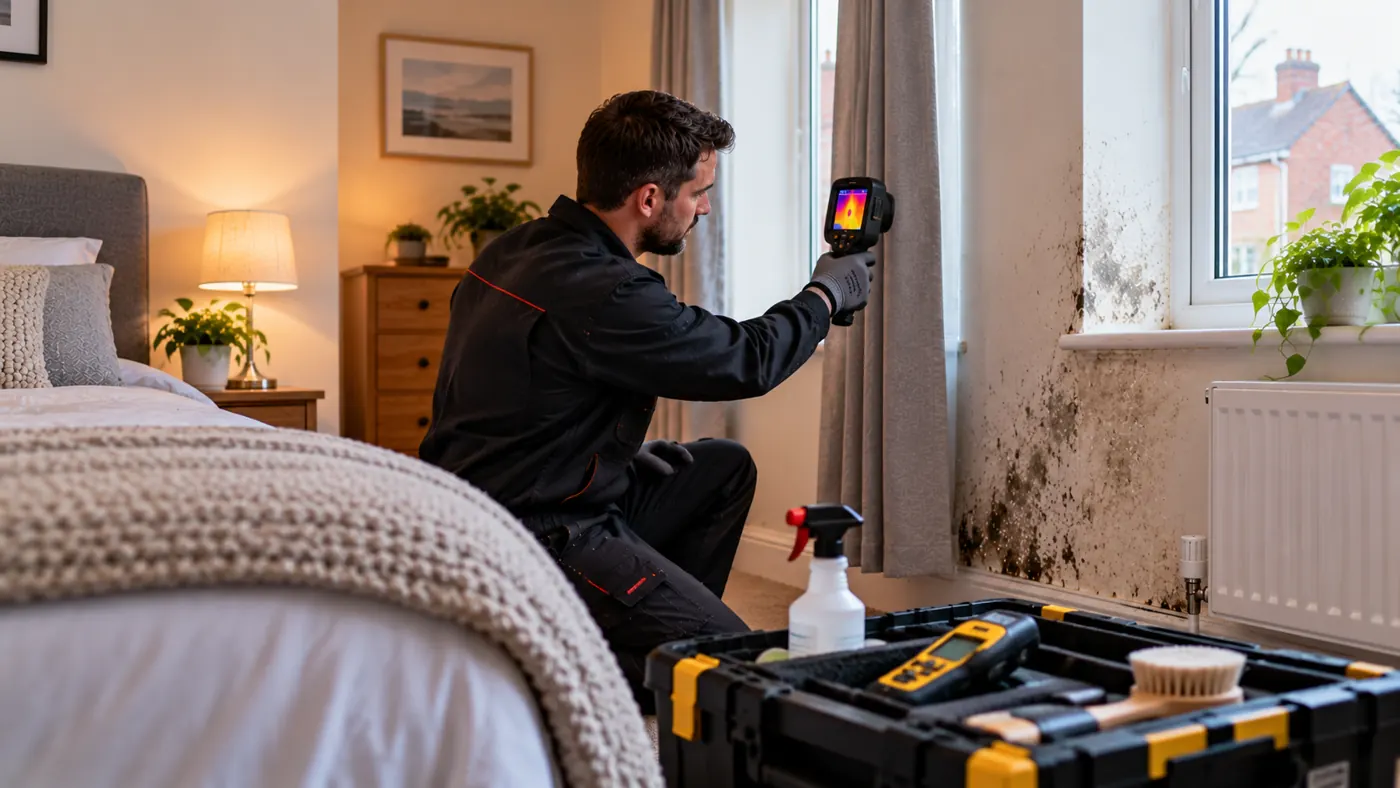
Improve Bedroom Ventilation
Use available ventilation appropriately and ensure trickle vents are not unnecessarily blocked. Ventilation requirements vary between properties, especially during colder weather.
Manage Indoor Humidity
Avoid drying wet clothing in bedrooms where possible, and use suitable ventilation when moisture-producing activities take place elsewhere in the home. Monitoring humidity may help you recognise periods when moisture levels remain high.
Allow Air to Move Behind Furniture
Where practical, leave space between large furniture and external walls. This can improve air circulation around areas that might otherwise remain cold and damp.
Investigate Persistent Moisture
If a wall remains damp, paint repeatedly deteriorates or mould returns despite changes to ventilation, further investigation may be necessary. A qualified building or damp specialist may be needed to identify and repair the underlying cause.
Bedroom Mould Removal for Homes and Rental Properties
Bedroom mould affects different types of residential accommodation, including family homes, flats, shared houses and rented properties. The right approach depends on the affected room, its condition and how the property is used.
Homeowners
We help homeowners dealing with mould on bedroom walls, ceilings, windows and furniture-adjacent surfaces. Our focus is on suitable mould treatment and practical advice about managing conditions that contribute to recurring growth.
Explore our Mould Removal & Cleaning ServiceLandlords and Letting Agents
Bedroom mould in rental accommodation requires careful attention to the affected areas and possible causes. We provide mould removal and treatment services for landlords and property managers, while underlying building defects remain the responsibility of the appropriate repair professional.
Learn more about our Landlord and Rental Property Mould TreatmentFlats and Shared Accommodation
Bedrooms in flats and shared properties can experience restricted ventilation, cold external walls and moisture-related problems. We can discuss the affected room and recommend suitable mould treatment based on the circumstances.
Explore our Residential Mould Removal ServiceWhy Choose JK Mould Removal?
Small patches of mould may appear easy to clean, but recurring or extensive growth can be more complicated than it first seems. JK Mould Removal focuses on professional mould treatment and cleaning for residential and rental properties across Nottingham and the Midlands, and helps ensure the affected materials and circumstances are considered before treatment begins. Learn more about who we are.
Treatment Based on the Surface
Bedroom walls, ceilings, window surrounds and other materials do not all respond to cleaning in the same way. A suitable approach considers the condition of the surface rather than relying on one cleaning method for every problem.
Attention to Hidden Areas
Mould can develop behind wardrobes, headboards and other furniture where it is not immediately visible. Checking accessible surrounding areas can help establish whether the problem extends beyond the first visible patch.
Consideration for Occupied Homes
Bedrooms contain mattresses, bedding, clothing and personal belongings and are used every day. Preparation, access and appropriate handling of the affected area are considered throughout.
Clear Treatment Recommendations & Aftercare
We explain the work being recommended, the areas it covers, any important limitations, and the practical steps that may help reduce recurring mould.
Mould-Focused Services
Our work centres on mould removal and treatment rather than general decorating or routine domestic cleaning.
Residential and Rental Property Support
We provide services for homeowners, landlords, letting agents and property managers dealing with mould concerns.
Bedroom Mould Removal in Nottingham and Across the Midlands
JK Mould Removal is based in Nottingham and provides bedroom mould removal services across the Midlands. We assist customers dealing with mould on bedroom walls, ceilings, windows and other affected surfaces. Our service area includes Nottingham, Derby, Leicester, Birmingham, Coventry and surrounding locations, subject to availability. If you are unsure whether we cover your property, contact us with your location and details of the mould problem.
Frequently Asked Questions About Bedroom Mould Removal
What causes mould on bedroom walls?
Is black mould in a bedroom dangerous?
Can you remove mould from behind a wardrobe?
Why does mould grow behind my bed?
Can bedroom mould grow on ceilings?
Why does mould appear around bedroom windows?
Will professional bedroom mould removal stop it coming back?
Should I clean bedroom mould myself?
Can mould affect bedroom furniture?
Do you remove mould from mattresses?
Do I need to move furniture before treatment?
How long does bedroom mould removal take?
How much does bedroom mould removal cost?
Do you repair damp walls or leaking roofs?
Do you offer bedroom mould removal across the Midlands?
Get a Quote for Bedroom Mould Removal
If you have discovered mould on your bedroom walls, ceiling, around windows or behind furniture, JK Mould Removal can help you understand the next steps. Tell us where the mould has appeared and request a quotation for suitable treatment.