
Airborne Mould Spore Treatment
Professional airborne mould spore treatment for homes, rental properties and businesses across Nottingham and the Midlands.
Mould spores can become airborne and move around indoor spaces, particularly when mould growth is disturbed. JK Mould Removal provides professional airborne mould spore treatment as part of a considered approach to managing mould contamination.
Whether you have recently discovered mould, experienced recurring growth or need advice following mould removal, our team can assess your situation and recommend suitable next steps.
What Is Airborne Mould Spore Treatment?
Mould releases microscopic spores that can travel through the air and settle on surfaces. These spores are naturally present in indoor and outdoor environments, but damp conditions can allow mould to grow and release further spores.
Airborne mould spore treatment focuses on managing airborne contamination associated with mould growth. Depending on the condition of the property, it may form part of a wider mould removal and cleaning plan.
Unlike visible mould cleaning, which focuses on affected surfaces, airborne treatment considers particles that may be circulating within an indoor space. However, airborne treatment does not replace the removal of existing mould growth or the need to address moisture problems.
At JK Mould Removal, we assess the situation before recommending treatment. Our aim is to help customers understand what work may be appropriate rather than applying the same solution to every property.
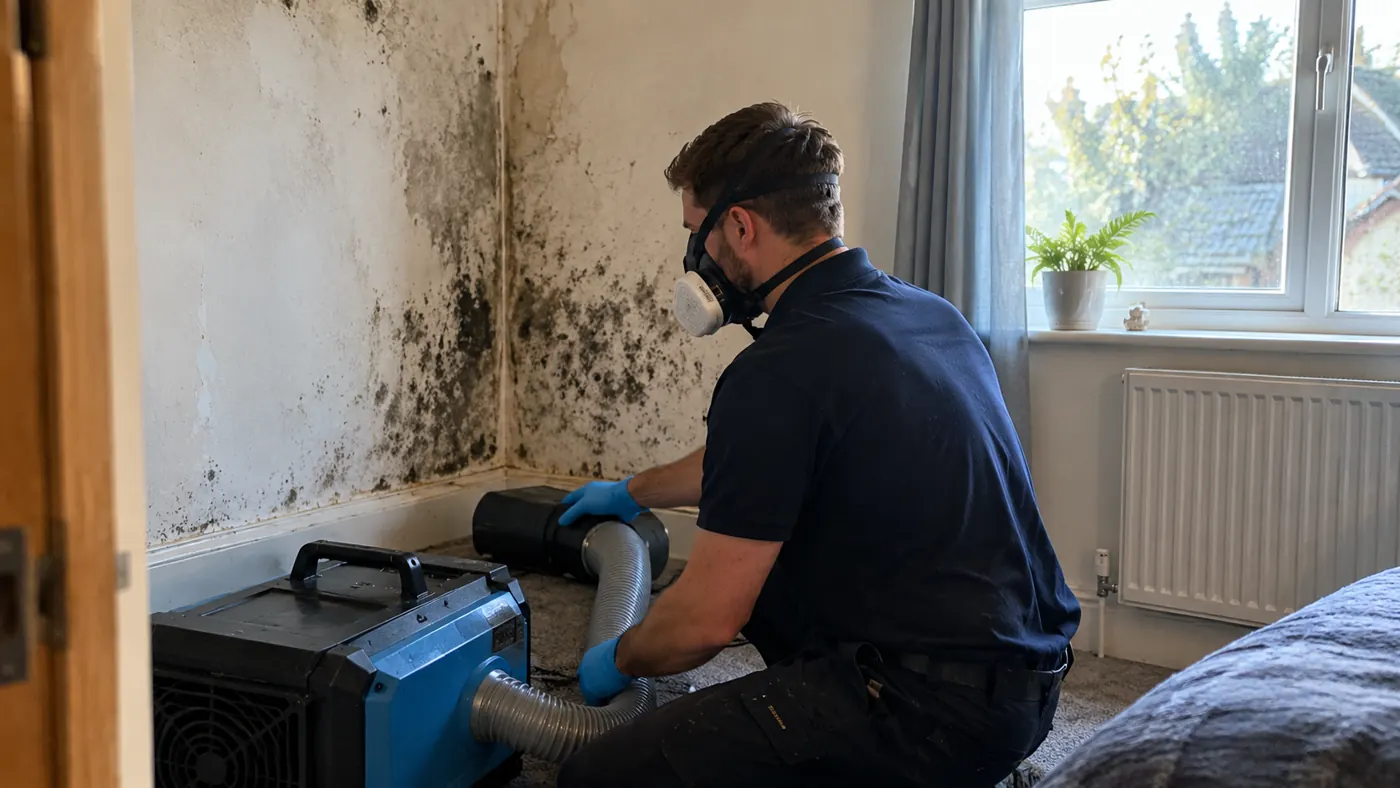
When Might Airborne Mould Spore Treatment Be Needed?
Not every property with mould requires separate airborne treatment. The appropriate approach depends on the extent of the growth, the affected materials and the circumstances of the property. Airborne mould treatment may be considered in the following situations.
After Significant Mould Growth
Where mould has affected a larger area, airborne particles may be disturbed during cleaning or removal. Additional airborne contamination control may be considered as part of a properly planned treatment process.
Following Mould Removal Work
Removing visible mould is an important part of remediation, but cleaning methods and site conditions can influence how particles move through a room. A suitable treatment plan may include measures to control airborne particles during or after the work.
When Mould Keeps Returning
Recurring mould can indicate that an underlying moisture problem has not been resolved. Before recommending further treatment, it is important to consider where the mould is growing and why the conditions continue to support it.
In Properties With Hidden Mould Concerns
A persistent musty smell or signs of dampness may suggest mould growth in an area that is not immediately visible. An inspection can help identify visible signs and possible areas of concern. A smell alone does not confirm elevated airborne spore levels.
In Rental and Commercial Properties
Landlords, letting agents and business owners may require professional advice when mould affects occupied rooms or shared spaces. The appropriate response should consider the affected area, property use and any necessary cleaning or remediation work.
Unsure whether your property needs airborne treatment?
Contact JK Mould Removal to discuss the problem before arranging workOur Approach to Airborne Mould Spore Treatment
JK Mould Removal takes a property-specific approach. The work required depends on the extent of the mould, the surfaces involved and the conditions within the affected space.
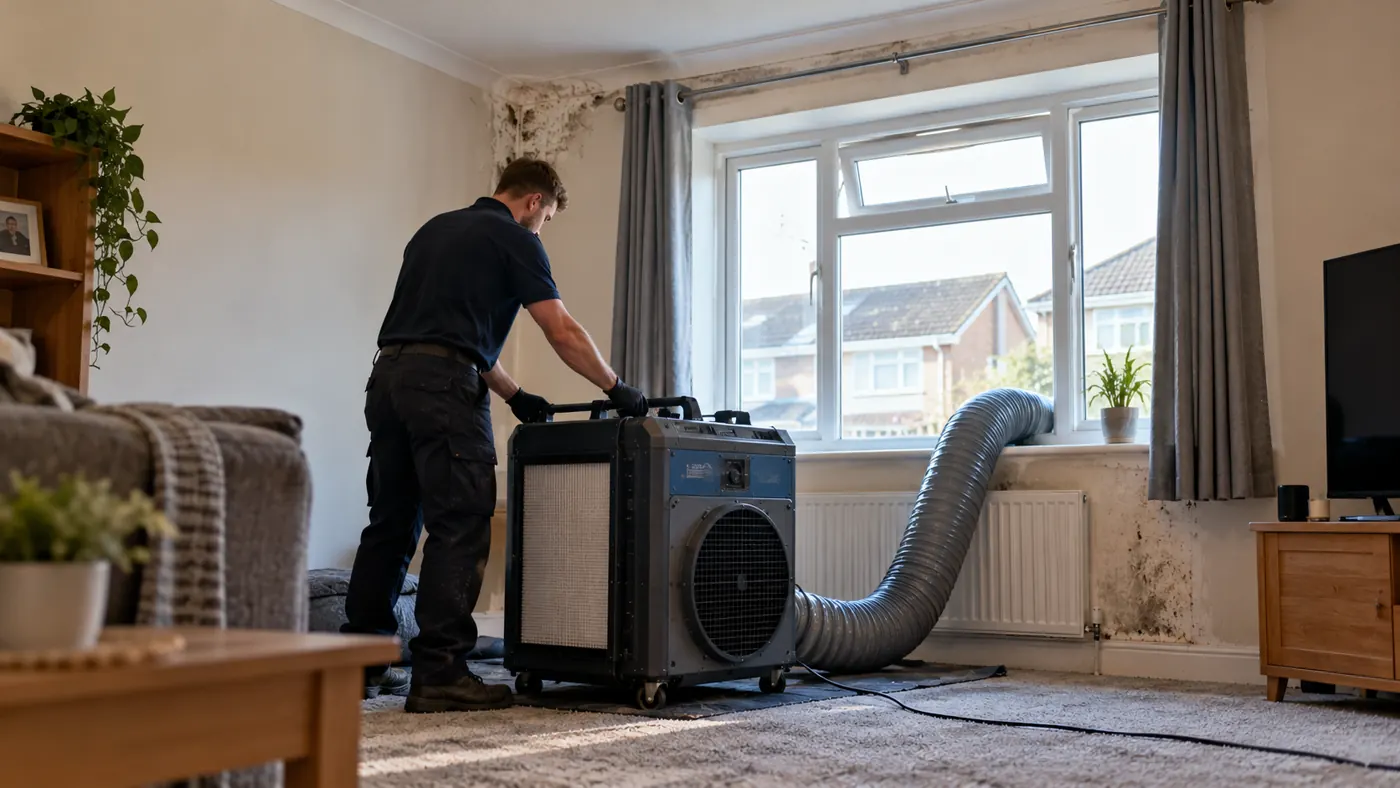
Initial Discussion and Assessment
We begin by understanding the problem, including where mould has appeared, how long it has been present and whether previous treatment has been carried out. Where appropriate, the affected areas are assessed to help determine what type of mould remediation may be suitable.
Identifying the Treatment Requirements
The next step is to consider the visible mould, affected materials and potential for contamination to spread. We explain whether airborne contamination control should form part of the wider mould treatment plan.
Appropriate Treatment and Cleaning
Treatment is selected according to the circumstances of the property and the work required. Where airborne contamination control is appropriate, it should be carried out alongside suitable surface cleaning, removal or other necessary remediation measures. The exact methods and equipment used should be explained before work begins.
Aftercare and Practical Advice
Once the agreed work is complete, we provide practical guidance about managing conditions that can encourage mould growth, including ventilation, condensation and indoor humidity. If a separate trade is required to repair a moisture problem, that work must be arranged independently.
Airborne Mould Treatment vs Surface Mould Removal
Airborne mould spore treatment and surface mould removal address different aspects of a mould problem. Understanding the difference helps property owners choose the right service.
Surface Mould Removal
Surface mould removal focuses on visible growth affecting walls, ceilings and other materials. Depending on the affected surface and condition, professional work may involve cleaning, treatment or the removal of materials that cannot be effectively cleaned.
Learn more about our Mould Removal & Cleaning ServiceAirborne Mould Spore Treatment
Airborne treatment focuses on managing airborne particles associated with mould contamination. It may be considered as a supporting measure during a wider remediation project, particularly where work could disturb mould growth.
Why Both May Be Considered
Treating the air without addressing existing mould growth can leave the original contamination source in place. Likewise, cleaning visible mould without considering how the work affects the surrounding area may be insufficient in some situations. The correct combination depends on the property, the extent of contamination and the treatment plan.
What Airborne Mould Spore Treatment Can and Cannot Do
Clear expectations are important when dealing with mould contamination.
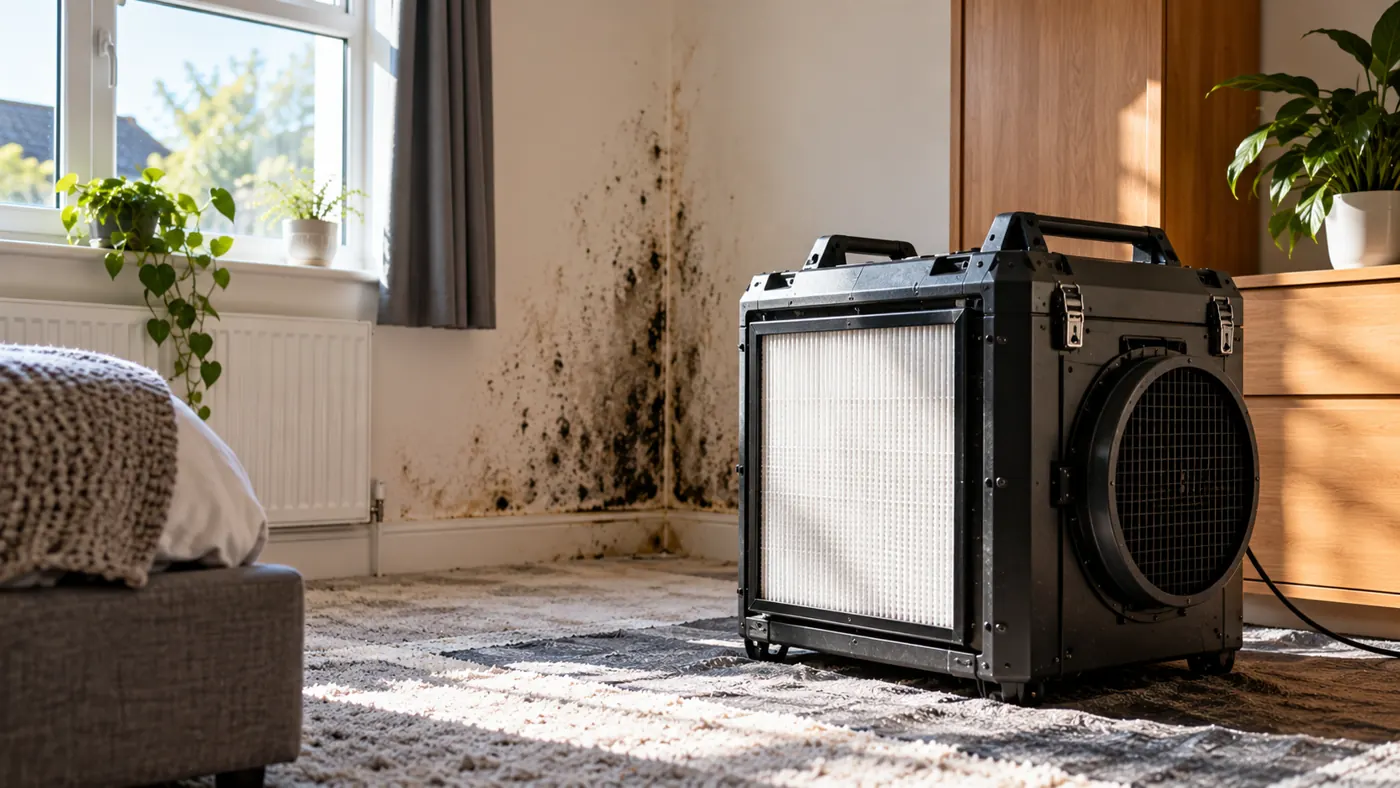
What It May Help With
- Manage airborne particles during mould remediation.
- Reduce the spread of disturbed contamination into surrounding areas.
- Support a wider professional mould removal and cleaning process.
- Improve control of contamination while affected spaces are being treated.
What It Cannot Guarantee
- Make a property completely free from mould spores.
- Guarantee that mould will never return.
- Repair leaking pipes, roofs or structural defects.
- Eliminate mould growing inside untreated materials.
- Replace necessary surface mould removal.
- Guarantee a particular health outcome or indoor air quality result.
Mould spores occur naturally in the environment. Effective remediation focuses on dealing with unwanted mould growth, controlling contamination and preventing conditions that allow further growth.
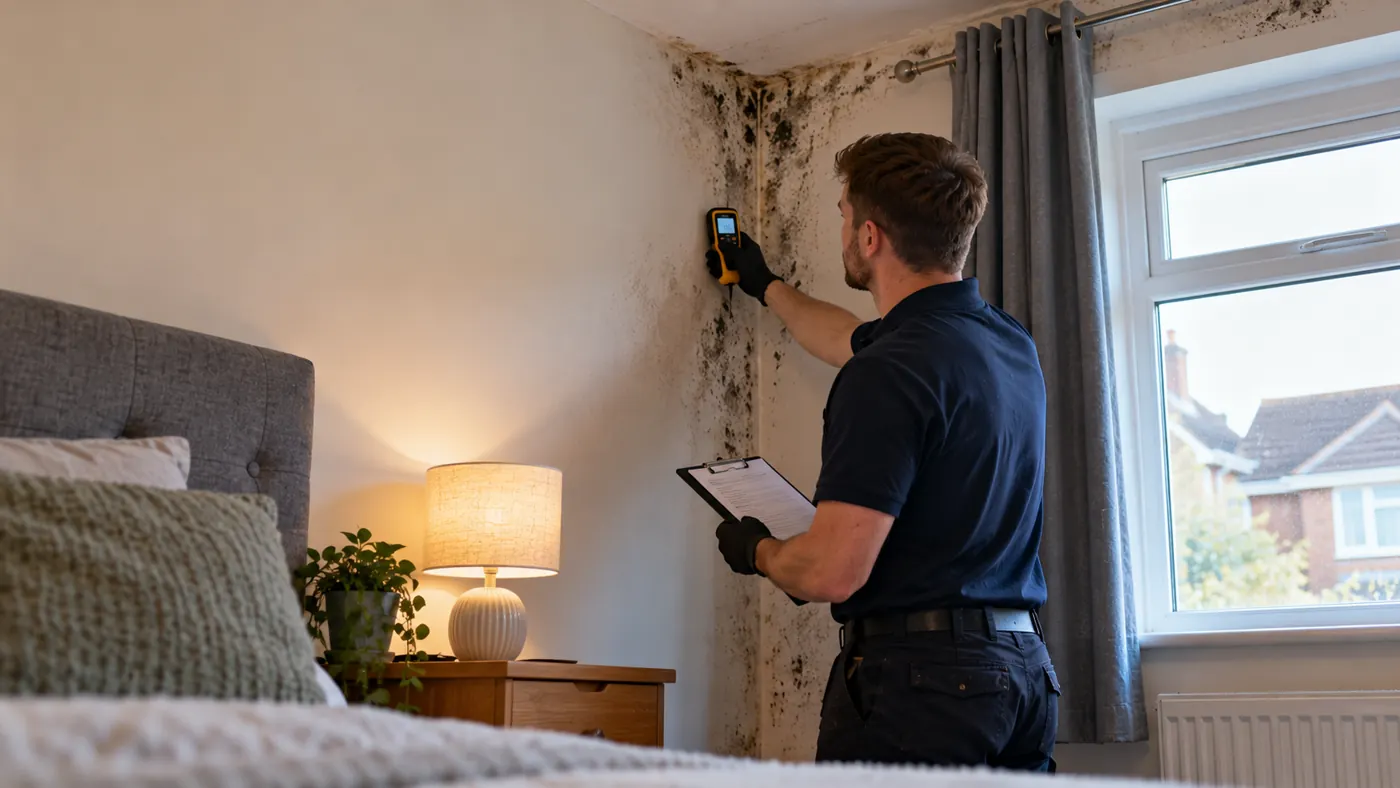
Why Moisture Control Matters After Treatment
Mould needs suitable conditions to grow, and excess moisture is one of the most important contributing factors. Even after professional treatment, mould can return if the property continues to experience damp conditions.
Condensation and Humidity
Condensation can form when warm, moisture-laden air meets colder surfaces. Bedrooms, bathrooms and poorly ventilated rooms can be particularly vulnerable. Improving ventilation, managing humidity and reducing persistent condensation may help limit future mould growth.
Leaks and Water Damage
Water entering through roofs, plumbing or building defects can keep materials damp. Where a leak or defect is responsible, the underlying issue needs to be repaired by an appropriate professional.
Cold Surfaces and Restricted Airflow
Cold external walls, corners and spaces behind furniture may experience condensation when air circulation is limited. Identifying these conditions can help property owners take practical steps to reduce recurring problems.
Important: JK Mould Removal specialises in mould treatment and removal. We do not undertake plumbing repairs, structural repairs or damp-proofing work as part of this service.
Airborne Mould Treatment for Different Properties
Mould contamination can affect residential, rented and commercial spaces. Each property requires consideration of its use, condition and affected areas.
Homes and Residential Properties
Mould can appear in bedrooms, bathrooms, living rooms and other spaces where moisture builds up. Our residential mould services help homeowners understand the problem and arrange suitable treatment for affected areas.
Residential Mould Removal ServiceLandlords and Rental Properties
Mould concerns in rental accommodation should be addressed promptly and appropriately. Landlords and property managers may need an assessment of the affected areas, a clear treatment plan and advice about conditions that could lead to further growth.
Landlord and Rental Property Mould TreatmentCommercial Buildings
Offices, shops and other commercial premises may experience mould problems where moisture affects walls, ceilings or internal materials. The treatment approach should take account of building use, occupied areas and the need to manage contamination during remediation.
Commercial Mould Removal ServiceWhy Choose JK Mould Removal?
Choosing a mould removal company involves more than finding someone to clean a visible patch. You need clear information about the problem, the proposed treatment and what may be necessary to reduce the chance of further growth.
Focused Mould Removal Services
We provide specialist services focused on mould treatment, cleaning and remediation, and consider airborne contamination within the wider context of the property's mould problem.
A Property-Specific Approach
Mould problems vary between properties. We aim to recommend appropriate work based on the affected area and circumstances rather than suggesting unnecessary treatment.
Clear Explanations
We explain the purpose of the proposed treatment and the limitations of mould remediation, so customers understand what the service includes before proceeding.
Support for Different Property Types
Our services cover homes, rental accommodation and commercial properties. We work with homeowners, landlords, letting agents and businesses seeking professional help with mould problems.
Practical Prevention Advice
Treatment is only one part of managing mould. We also explain why moisture control matters and when additional repairs may be required from another trade.
Airborne Mould Spore Treatment in Nottingham and the Midlands
JK Mould Removal is based in Nottingham and provides mould removal and treatment services across Nottingham and the wider Midlands. We assist homeowners, landlords, letting agents and businesses dealing with mould concerns in residential and commercial properties. Whether you have visible mould growth or need advice about possible airborne contamination, you can contact us to discuss the situation and available services.
Availability and suitability of treatment depend on your location and the nature of the work required.
Frequently Asked Questions About Airborne Mould Spore Treatment
What is airborne mould spore treatment?
Can mould spores travel through the air?
Is airborne mould treatment the same as mould removal?
Can airborne treatment remove all mould spores?
Do I need airborne treatment after mould removal?
Can airborne mould treatment stop mould coming back?
Can airborne mould spores affect indoor air quality?
Can you treat airborne mould spores in bedrooms?
Do you provide airborne mould treatment for commercial properties?
Can a musty smell mean there are airborne mould spores?
Do you repair the damp problem causing mould?
How much does airborne mould spore treatment cost?
Get Professional Advice About Airborne Mould Spore Treatment
If you are concerned about mould contamination in your home, rental property or commercial building, JK Mould Removal can help you understand the available treatment options across Nottingham and the Midlands.