How to Get Rid of Black Mould: What Actually Works?
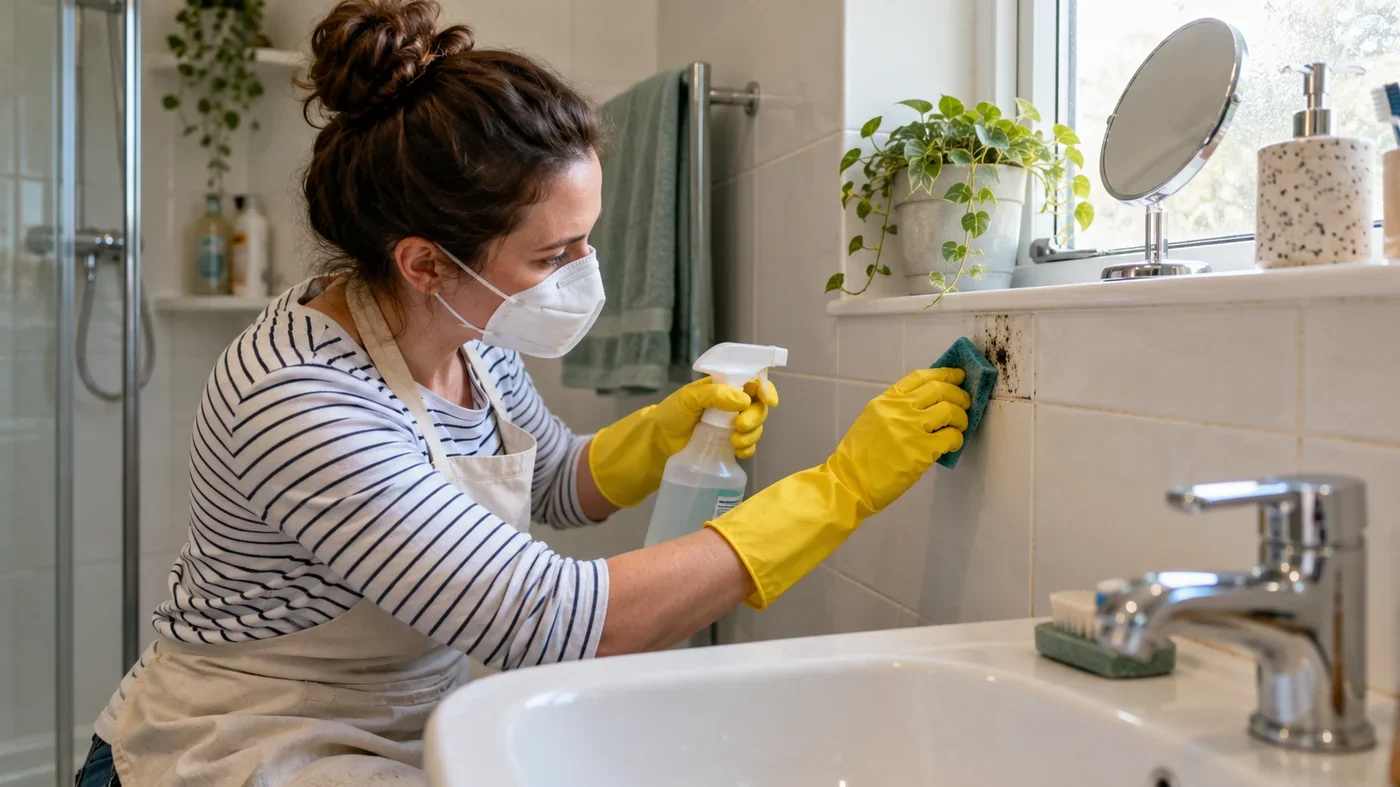
Black mould returns because wiping it off removes the stain, not the cause. You scrub, the patch fades, and within weeks the dark spots creep back across the ceiling or the sealant.
This guide shows how to get rid of black mould safely, which products suit which surfaces, and when to call a professional.
What actually works against black mould?
Two steps work together: remove the mould properly, then fix the moisture that feeds it. Skip either one and the growth comes back.
Cleaning clears the visible patch. Condensation, a leak or a cold wall keeps supplying the damp, so mould regrows, often in the same spot.
| Method | Does it work? | Why |
|---|---|---|
| Mould-and-mildew cleaner on a small hard-surface patch | Yes | GOV.UK says tenants can remove small amounts this way. |
| Diluted bleach | Partly | It whitens hard surfaces but leaves roots in plaster and paint. |
| Dry brushing or scrubbing | No | It sends spores into the air. |
| Painting over mould | No | It does not stop the mould returning. |
| A dehumidifier on its own | No | It lowers humidity but does not remove growth or fix the cause. |
| Fixing ventilation, heat and leaks | Yes | It removes the damp that feeds the mould. |
Federation of Damp guidance, reviewed in July 2026, makes the same point. Cleaning only maintains the result, while finding the moisture source cures the problem.
For a large or recurring patch, black mould removal by a specialist is the safer route. Smaller patches suit careful DIY, covered next.
Is it safe to remove black mould yourself?
Yes, for a small patch on a hard surface, if you protect yourself and contain the spores. UK damp guidance, including Federation of Damp's July 2026 review, puts the DIY limit at about one square metre.
Larger, hidden or recurring mould needs a professional. So does any job involving someone with a health condition.
The GOV.UK damp and mould guidance, updated April 2026, lists who faces higher risk:
People with asthma, COPD or heart disease
People with a weakened immune system
People living with a mental health condition
Pregnant women and new mothers
Children, older people, and anyone housebound or with limited mobility
The same guidance estimates that 4% to 27% of homes in England have damp and mould. That equals 962,000 to 6.5 million households, and the range is wide because studies measure it differently.
It also links damp and mould to an estimated 5,000 asthma cases and 8,500 lower respiratory infections in 2019.
Wear gloves, eye protection and a well-fitted mask. UK National Archives guidance accepts FFP2 or FFP3 and advises FFP3 for mould spores.
If you rent, tell your landlord in writing first and attach photos. That creates a record before you clean.
How to get rid of black mould step by step
This is how to remove black mould from most household surfaces: dampen it, wipe it off with a suitable cleaner, bag the cloths, dry the area and fix the cause. Follow the six steps in order.
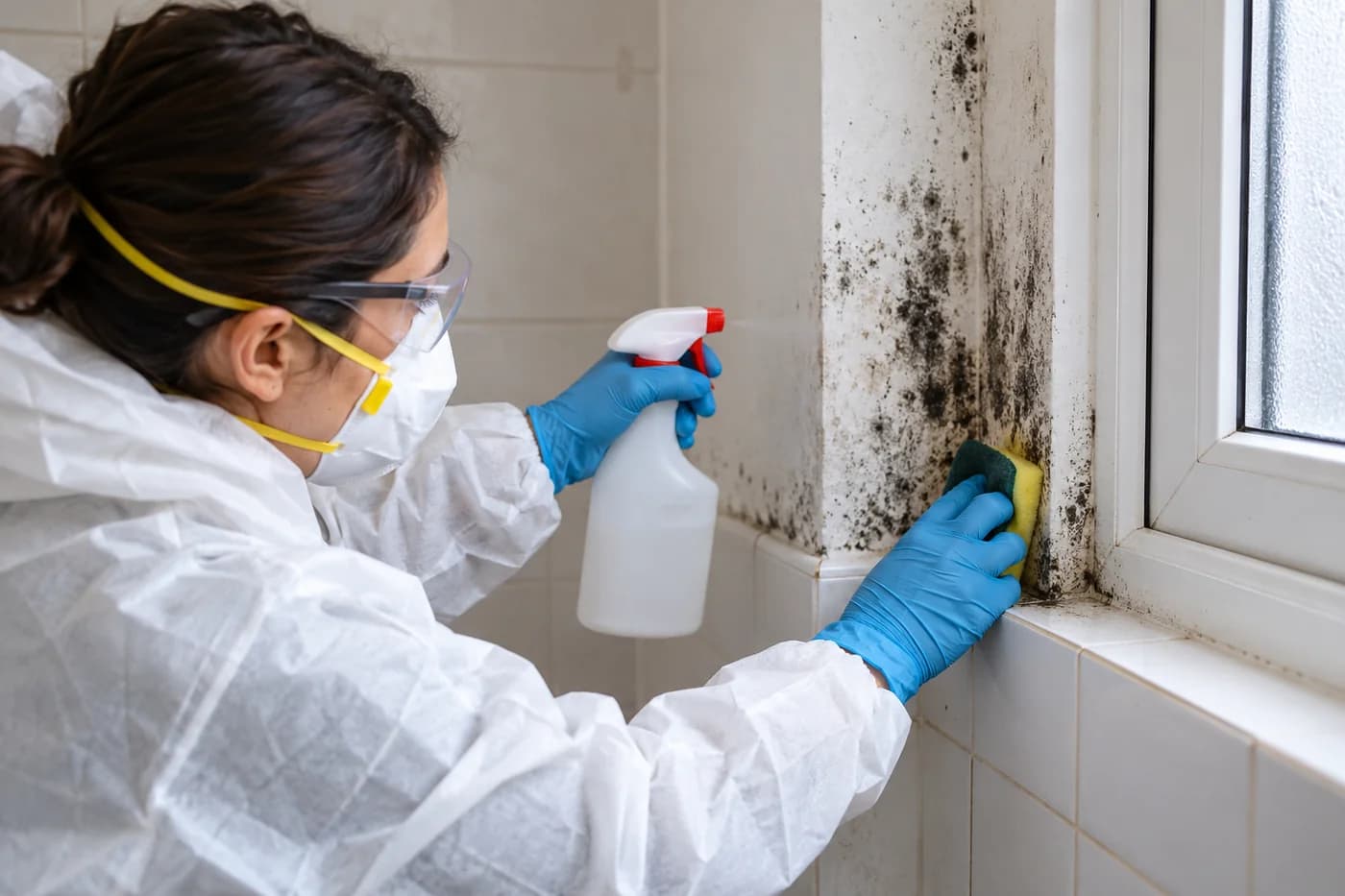
1. Protect yourself and seal off the room
Put on your gloves, eye protection and mask. Close internal doors so spores stay in the room, and open a window to the outside.
2. Dampen the mould, never dry-brush
Spray the patch and the area around it before you touch it. Dry brushing or dry scrubbing releases spores into the air.
3. Choose the product by surface
| Surface | What to use |
|---|---|
| Tiles, glass and sealed hard surfaces | Mould-and-mildew cleaner, or diluted bleach if the label allows |
| Painted walls and ceilings | Mould-and-mildew cleaner or fungicidal wash; test a hidden spot first |
| Plaster and grout | Fungicidal wash; leave it on for the label time |
| Wallpaper | Strip it and check the wall behind |
| Carpets and soft furnishings | Hot-wash fabrics and throw away items that stay mouldy |
Read the label for contact time and ventilation advice before you spray. Mould on ceilings and walls can hide behind paint or paper, so check behind wallpaper and around the edge of the patch.
4. Wipe, bag and wash
Wipe with disposable damp cloths. Seal the used cloths in a bag and bin them, then wash the clothes you wore separately on a hot cycle.
Never mix bleach with ammonia, acids or other cleaners, because the mixture can release toxic gas.
If the job turns out bigger than expected, a mould removal and cleaning service can finish it safely.
5. Dry the area fully
Open a window and run a fan or dehumidifier until the surface feels dry. A surface that stays damp invites regrowth.
6. Redecorate only when the wall is clean and dry
Gravesham Borough Council advises repainting with matt emulsion, which lets walls breathe. It warns that thick vinyl or silk paints can trap moisture between the wall and the paint.
Where spores have spread through the room, airborne mould spore treatment uses HEPA filtration and UV-C where appropriate.
Does bleach or vinegar kill black mould?
Bleach whitens black mould on hard surfaces but does not reliably reach the roots in porous plaster, paint or grout. Vinegar suits light surface mould.
UK official sources disagree on both products. The table shows where each one stands.
| Source | Advice |
|---|---|
| GOV.UK damp and mould guidance (April 2026) | Prefers mould-and-mildew products to bleach, for health and safety. |
| Gravesham Borough Council | Recommends equal parts white vinegar and water, and warns that bleach-based cleaners can feed regrowth. |
| Stafford Borough Council (February 2026) | Lists mild detergent, diluted bleach or a fungicidal wash, and says to follow the product instructions. |
Mumsnet threads from 2020 to 2025 show the same split. Some posters report that bleach cleared a bathroom ceiling, while others report that the mould came back and recommend a proper mould spray.
Take the common ground. Start with a mould-and-mildew cleaner or fungicidal wash, keep bleach for tiles and glass if the label allows, and never mix products.
Why does black mould keep coming back?
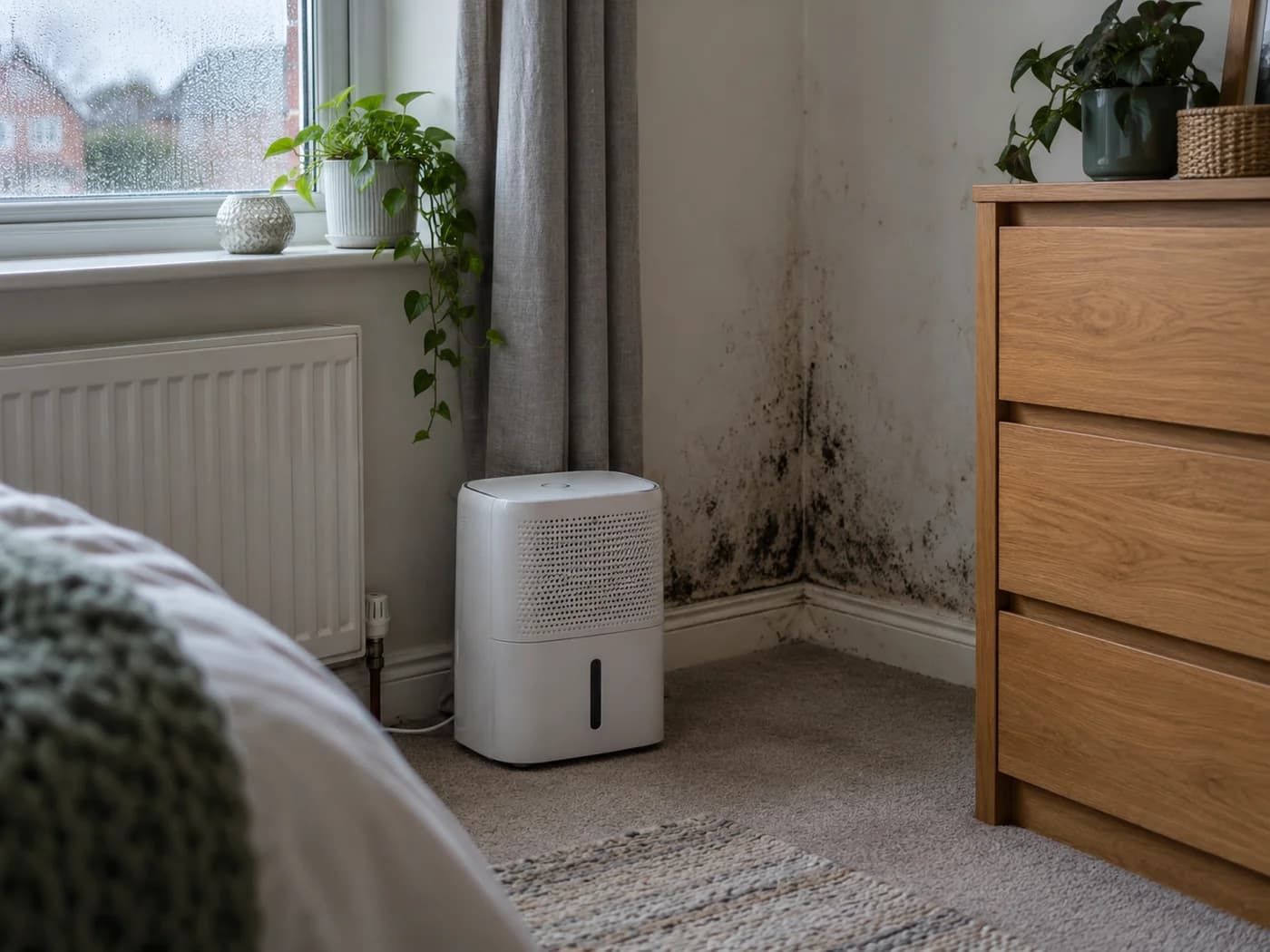
Black mould returns when surfaces stay damp or cold, because cleaning does not change those conditions. Condensation causes most cases, followed by leaks and building defects such as penetrating damp.
| Where it appears | Likely cause | First check |
|---|---|---|
| Ceiling above a shower | Steam with weak extraction | Does the fan keep running after you finish? |
| Along sealant or grout lines | Failed sealant that traps moisture | Does mould return on the same line within weeks? Replace the sealant. |
| Behind wardrobes and beds on outside walls | Cold wall with no airflow | Pull furniture away and leave a gap |
| Patch below a window or after rain | Penetrating damp or a leak | Check gutters, pointing, render and window seals outside |
| Ceiling below a bathroom | A leak | Look for staining and call a plumber |
For stubborn growth in wet rooms, see bathroom mould removal. Cold bedroom walls suit bedroom mould removal.
A 2023 Mumsnet thread describes a ventilated bathroom that still never dried between uses. Check whether your fan runs long enough to clear the steam.
A December 2025 Reddit thread describes a tenant who ran the heating, vents and three dehumidifiers for years yet kept cleaning the same room. One reply pointed to cracks in the outside mortar, so inspect the exterior wall when one room keeps failing.
A UK property-care firm's guide, published in July 2024 and updated in October 2026, says a dehumidifier lowers humidity but does not stop mould. It adds that a neglected tank can grow mould and spread spores, so empty and clean it regularly.
GOV.UK says poorly insulated or inadequately heated homes suffer more condensation. It suggests loft insulation of at least 270mm, but warns that energy-efficiency work can reduce ventilation, so check airflow afterwards.
How do you stop black mould coming back?
Control moisture at the source and keep surfaces warm. These habits draw on GOV.UK and Federation of Damp advice:
Run extractor fans in kitchens and bathrooms, ideally with an overrun, and have them serviced.
Keep trickle vents open and unblocked.
Close doors and cover pans when you cook or shower.
Dry laundry outdoors where possible.
Keep rooms steadily warm rather than switching heating on and off.
Leave a gap between furniture and outside walls.
Fix leaks promptly and keep gutters clear.
When should you call a professional for black mould removal?
Call a professional when the patch exceeds about one square metre, keeps returning, hides behind surfaces or affects someone with a breathing condition.
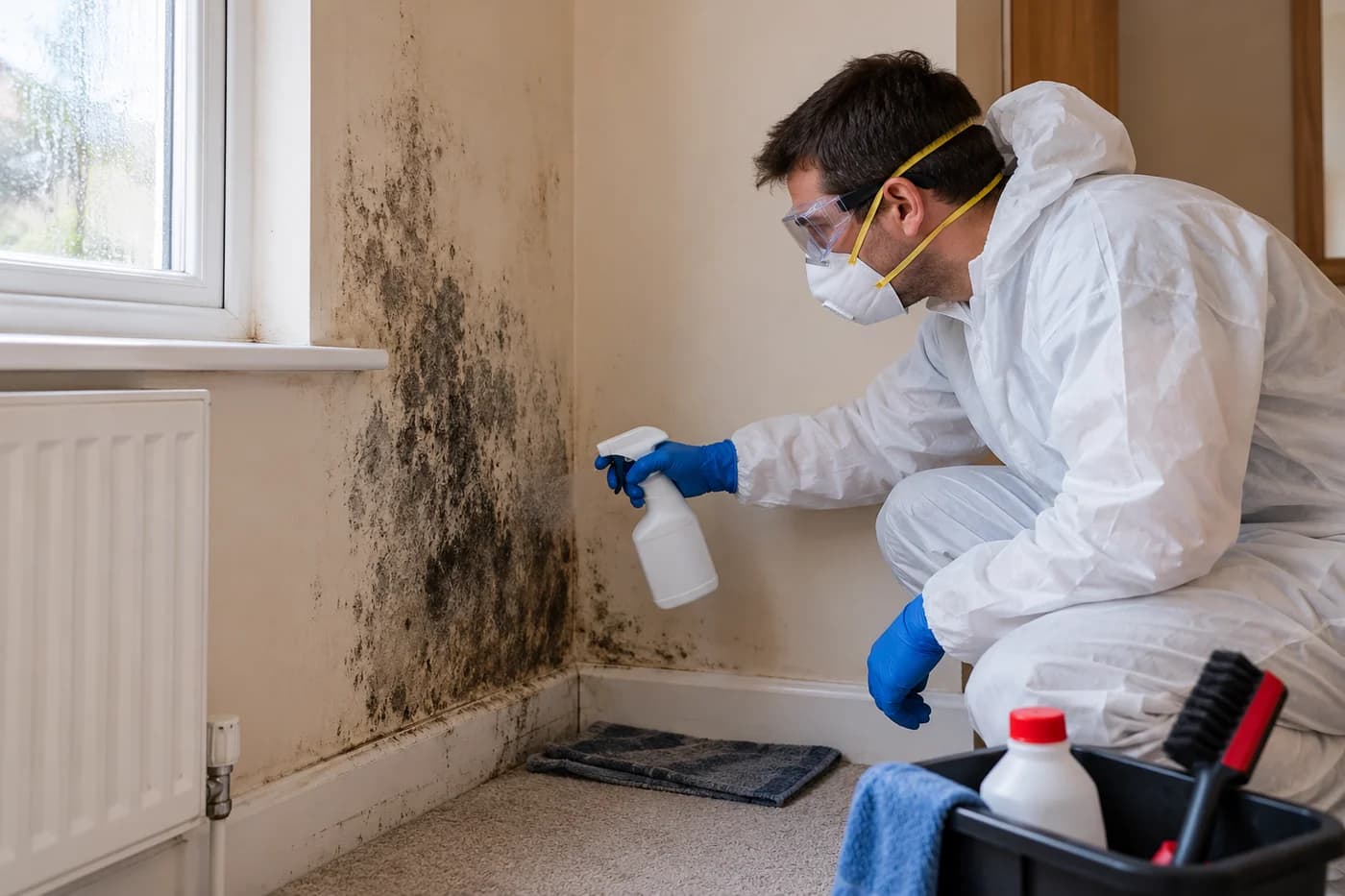
JK Mould Removal, based in Nottingham, treats black mould in homes, rentals and businesses. The team covers Nottingham, Derby, Leicester, Birmingham and Coventry, subject to availability.
Each job follows three steps: assessment, removal and treatment suited to the surface, then aftercare advice on airflow and condensation.
JK removes mould only. It does not repair leaks, structural damp, plumbing, insulation or ventilation, so book the right trade for the cause. No treatment can promise that mould never returns.
Cost depends on the area, how far the growth has spread, the surface and access, so JK quotes each job individually.
Landlords must keep rented homes free of serious hazards, and JK provides documentation of completed work where applicable.
GOV.UK lists three main duties for rented homes: the Housing Act 2004 hazard rules, the Environmental Protection Act 1990 and the Homes (Fitness for Human Habitation) Act 2018. Councils enforce the first two, and tenants can use the courts for the third.
Awaab's Law has set repair deadlines for social landlords since October 2025. It does not yet apply to private rentals, and a GOV.UK consultation, open from 9 October to 18 December 2026, gives no start date.
One 2023 Mumsnet poster reported that a landlord's firm painted over bathroom mould and it kept returning. If that happens to you, ask in writing for the cause to be found.
Need black mould removed in Nottingham or the wider Midlands? Request a free quote and describe the room, the size of the patch and any known leaks.
Black mould questions answered
Does bleach kill black mould?
Is black mould dangerous?
Can I paint over black mould?
Will a dehumidifier get rid of black mould?
How do I get rid of black mould for good?
Who is responsible for black mould in a rented home?
Need Professional Mould Removal?
Tell JK Mould Removal where the problem is and we'll review your enquiry and explain the next step.